


Google ran. Microsoft sprinted. OpenAI changed the world overnight. Apple? Apple waited.
For the last three years, the tech industry has been obsessed with the frantic speed of generative AI. Models get bigger, faster, and smarter by the week. Yet, Cupertino stood still. To the critics, it looked like arrogance—or worse, incompetence. They argued Apple missed the most significant platform shift since the iPhone.
But that narrative is incomplete. Apple’s “delay” wasn’t just a missed deadline. It was the byproduct of a massive, silent collision between the data-hungry nature of Large Language Models (LLMs) and Apple’s rigid, almost religious, stance on privacy. They didn’t just fall behind; they refused to play by the established rules.
Here is why Apple stalled, how they are rewriting the architecture of AI to fit their walled garden, and whether it’s enough to save them.
The Anatomy of the Lag: The Siri Problem
We can’t talk about Apple’s AI struggles without talking about the elephant in the room: Siri.
When Siri launched in 2011, it was a marvel of command-and-control logic. You asked for the weather, it fetched a weather file. You asked for a stock price, it pinged a database. It was rigid. It was safe.
It was also a dead end.
Modern AI, the kind powering ChatGPT, is probabilistic. It doesn’t fetch answers; it predicts them. It deals in nuance and creativity. Siri’s underlying architecture—a decade of spaghetti code, manual fixes, and hard-coded responses—was fundamentally incompatible with this new world. Apple engineers couldn’t just “plug in” a chatbot. They had to rethink the entire stack.
Complicating matters was Apple’s organizational paranoia. Training high-performance LLMs requires scooping up massive amounts of data and crunching it in the cloud. Apple’s brand is built on not doing that. This internal friction paralyzed them. While Google engineers were willing to risk data privacy for capability, Apple executives were not.
The Pivot: Private Cloud Compute
The solution, unveiled at WWDC 2024, was “Apple Intelligence.” It wasn’t a magic app. It was an infrastructure play.
Apple realized it couldn’t run a GPT-4 class model entirely on an iPhone. The battery would die in an hour. But they also refused to send open-ended user data to a generic server farm. Their answer was a hybrid “Two-Tier” system:
- On-Device: If you ask your phone to summarize an email, a small, efficient model (roughly 3 billion parameters) handles it locally. No data leaves the device.
- Private Cloud Compute (PCC): If you ask something complex, the phone hands it off to Apple’s servers.
This is where Apple got clever. These aren’t standard servers. They run on Apple Silicon, they don’t store data (it’s wiped instantly after the request), and the software image is verifiable by third-party researchers. They essentially built a privacy airlock for AI.
It’s a brilliant technical workaround. The problem? It took years to build, resulting in the staggering, slow-motion rollout we saw throughout 2025.
Comparative Analysis: Apple vs. The Field
Apple isn’t trying to build an omniscient god-bot. They don’t care if Siri knows the capital of 14th-century distincts in Peru. They want Siri to know you.
While Google and OpenAI fight for “World Knowledge,” Apple is cornering “Personal Context.”
| Feature/Metric | Apple Intelligence | Google Gemini | OpenAI (ChatGPT) |
|---|---|---|---|
| Primary Focus | Personal Context & Utility | Multimodal Reasoning & Search | General Knowledge & Creativity |
| Processing | Hybrid (On-Device + Private Cloud) | Cloud-Native (Heavy Server) | Cloud-Native (Heavy Server) |
| Data Privacy | High (Stateless Cloud Compute) | Moderate *Data used for training | Low/Moderate *Data used for training |
| Ecosystem | Locked to Apple Hardware | Cross-Platform (Android/Web) | Platform Agnostic |
| Multimodality | Limited (Text/Images) | Native (Video/Audio/Text) | Native (Voice/Image/Text) |
| Rollout Speed | Slow / Staggered | Rapid / Continuous | Rapid / Continuous |
Note: Enterprise and paid versions of Gemini and ChatGPT offer higher data privacy protections.
The Hardware Wall: The RAM Trap
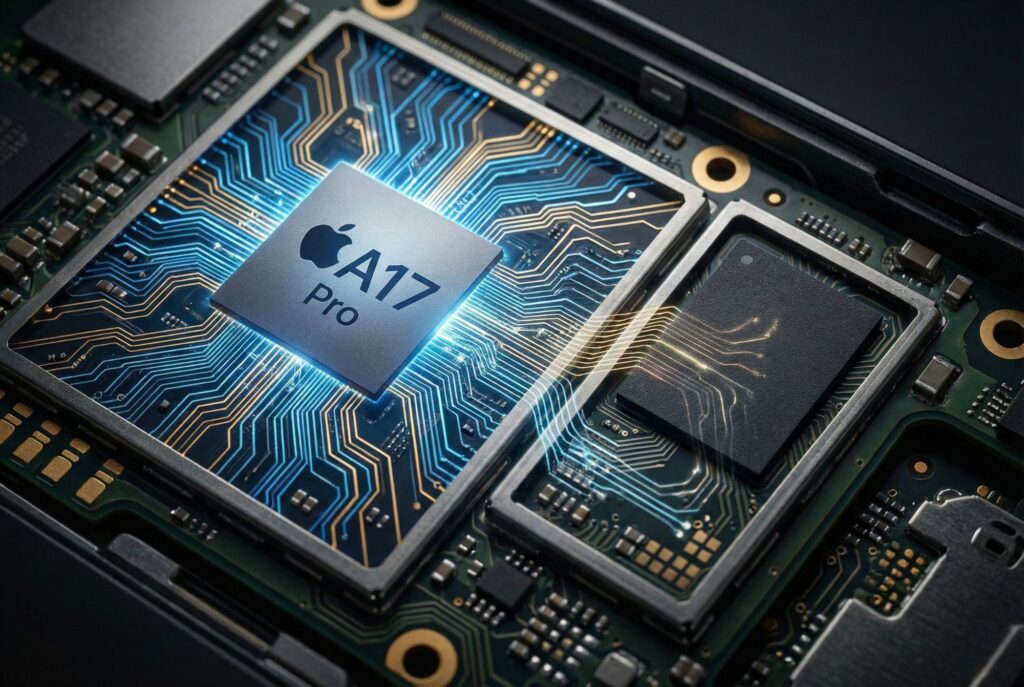
There is a boring, hardware-level reason for Apple’s struggle that doesn’t get enough headlines: RAM.
For a decade, Apple optimized iOS to run beautifully on minimal memory. An iPhone with 6GB of RAM could outperform an Android with 12GB. It was efficient. It was profitable.
It was also a trap.
AI models live in memory. You need space to load the weights. Apple’s extreme efficiency meant the vast majority of iPhones in circulation—including the standard iPhone 15—physically could not run the new models. This forced a hard bifurcation of the user base. Only those with the Pro models (8GB RAM) or the newer 16/17 series could play.
This slowed adoption significantly. You can’t have a viral AI moment if 80% of your customers are locked out of the feature.
The Strategic Outsourcing: The OpenAI Bridge
The most humble moment in Apple’s recent history was the partnership with OpenAI.
By integrating ChatGPT into Siri for general queries, Apple admitted defeat—at least temporarily. They effectively said, “We can handle your calendar, but we can’t write your history essay.”
This deal is a bridge. It shields Apple from the “hallucination” problem. If Siri gives you a wrong answer, it looks bad. If Siri asks, “Do you want me to ask ChatGPT?” and ChatGPT gives you the wrong answer, that’s OpenAI’s problem. It’s a smart defensive maneuver, allowing Apple to retain the user interface while outsourcing the messy, expensive business of “world knowledge.”
Future Outlook: 2026 and Beyond

So, where does Apple go now? They won’t stay dependent on OpenAI forever. The roadmap points away from chatbots and toward Agents.
1. Agentic AI: Apple doesn’t want you chatting with Siri. They want Siri to do things. The goal is “App Intents”—giving the AI permission to push buttons for you. “Edit this photo and email it to Bob.” That requires deep OS integration, not just a smart text generator.
2. Visual Intelligence: With the camera control on the newer iPhones, Apple is betting on visual search. Point your phone at a restaurant, see the menu. Point it at a dog, see the breed. This plays into their long game for Augmented Reality (AR) and the Vision Pro.
3. Health: This is the sleeper hit. An LLM that knows your heart rate history, your sleep patterns, and your calendar can do more than just count steps. It can become a proactive health coach. This is high-value, privacy-sensitive territory—exactly where Apple wins.
The Bottom Line
Apple is late. There is no debating that. They are playing catch-up on a track built by Google and OpenAI.
But Apple has never cared about being first. They care about being the default. By controlling the silicon, the OS, and the hardware, they are betting that convenience beats raw power. They don’t need to build the smartest AI in the world; they just need to build the one you actually use because it’s already in your pocket.
