

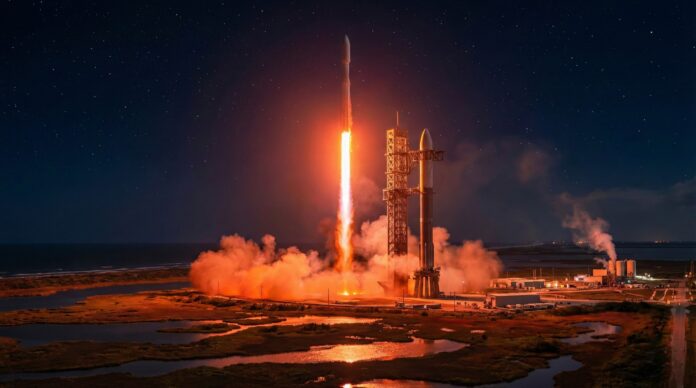
Amazon is officially a spacefaring internet provider. In a series of high-stakes launches from Cape Canaveral, the company successfully placed a critical mass of production satellites into low Earth orbit (LEO), moving its constellation from R&D theory to operational reality. Formerly known as “Project Kuiper,” the newly rebranded Amazon Leo network has achieved stable orbit and validated its communication arrays, marking Amazon’s first tangible threat to SpaceX’s dominance in the sector.
The deployment—executed via United Launch Alliance (ULA) Atlas V and SpaceX Falcon 9 rockets—did more than just put hardware in the sky. With approximately 180 satellites now active, Amazon has proven its proprietary optical inter-satellite links and Ka-band antennas actually work in the vacuum of space. The company is no longer simulating a network; they are building one. The goal is a commercial rollout by late 2026, targeting the billions of users currently ignored by terrestrial ISPs.
From Protoflight to Production Line
Getting here wasn’t pretty. Following the “Protoflight” test mission in October 2023, Amazon faced a manufacturing bottleneck. They needed to scale, and fast. That internal pressure triggered a rapid-fire launch schedule beginning in April 2025 that hasn’t let up since.
The results, however, validate the grind. Unlike early prototypes, these production units function as active nodes in a live mesh. They sit at 630 kilometers (391 miles)—a higher altitude than Starlink. This orbital choice is deliberate. A higher vantage point means each satellite “sees” more of the Earth, allowing Amazon to cover the globe with fewer units, though it forces the onboard transmission hardware to work harder.
“We have successfully established communications with all deployed satellites,” an Amazon spokesperson stated. “The mesh network is performing within nominal parameters.”
The “Amazon Leo” Pivot
Last November, Amazon killed the name “Project Kuiper.” Enter Amazon Leo.
The rebrand isn’t just marketing fluff. “Kuiper” was a nod to planetary science; “Leo” fits next to Prime and AWS. It signals a shift from an engineering project to a consumer product.
The strategy differs from SpaceX, too. Starlink grabbed early adopters and rural homeowners. Amazon Leo is aiming for the enterprise jugular—government contracts, logistics, and heavy integration with Amazon Web Services. The pitch is simple: a direct, secure line to the AWS cloud from anywhere on Earth, bypassing the public internet entirely.
Hardware: The User Terminals
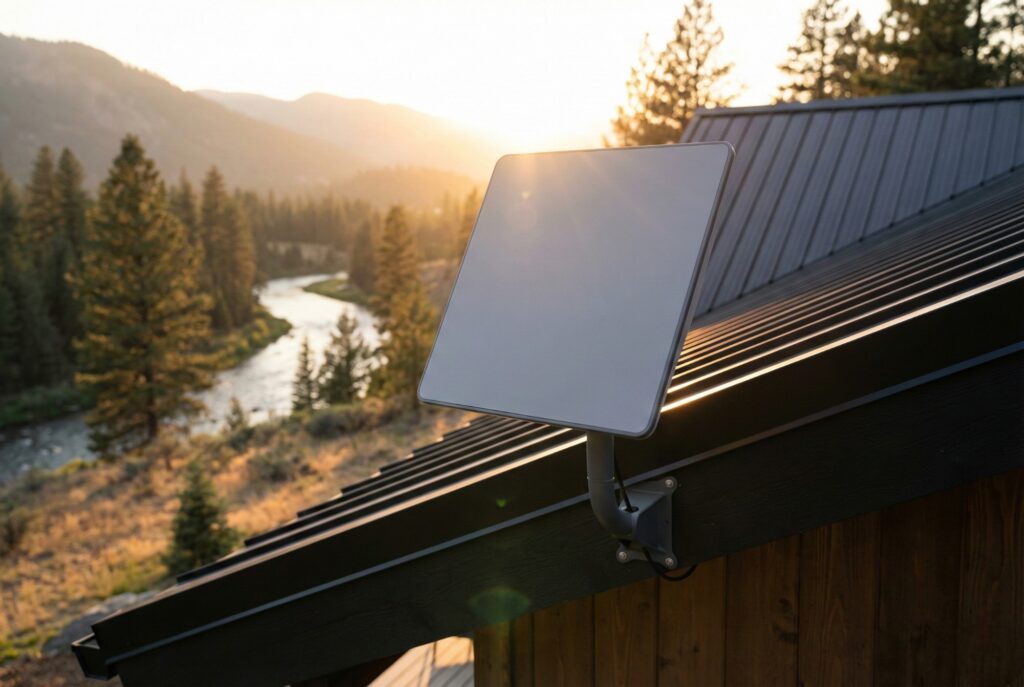
Satellites are useless without a way to talk to them. Amazon has finalized three terminal designs for the ground:
- Leo Nano: The entry-level option. It’s the size of an e-reader and pulls 100 Mbps.
- Leo Pro: The standard 11×11 inch square for homes. Delivers roughly 400 Mbps.
- Leo Ultra: The heavy lifter. Massive, enterprise-grade, and capable of 1 Gbps.
The secret sauce isn’t on the ground, though. It’s the lasers. Every satellite in the current batch carries optical inter-satellite links (OISLs). These lasers beam data between satellites—orbit to orbit—creating a mesh that functions over oceans or hostile terrain where ground stations can’t go.
The FCC Deadline Looming
Technically, the launch was a success. Logistically, Amazon is in a sprint against the regulator.
The Federal Communications Commission (FCC) license is strict: Amazon must have 50% of its authorized 3,236 satellites operational by July 2026. That is roughly 1,600 units.
As of January 2026, the count sits at roughly 180. The math is brutal. To hit that target, Amazon has booked an aggressive manifest of heavy-lift flights, banking on Arianespace’s Ariane 6 and Blue Origin’s New Glenn to carry massive payloads in the coming months.
The Tale of the Tape: Amazon Leo vs. Starlink
| Feature | Amazon Kuiper (Target) | SpaceX Starlink (Current) |
|---|---|---|
| Constellation Size | 3,236 Planned | ~6,000+ Operational |
| Orbital Altitude | 590–630 km | ~550 km |
| Max Speed (Consumer) | 400 Mbps (Leo Pro) | 200–500 Mbps |
| Primary Launchers | Atlas V, Ariane 6, New Glenn, Falcon 9 | Falcon 9 |
| Inter-satellite Link | Optical (Lasers) on all units | Optical (Lasers) on newer units |
| Regulatory Deadline | 50% by July 2026 | N/A (Already operational) |
The “TeraWave” Confusion
Complicating matters is Jeff Bezos’s other venture. In January, Blue Origin announced “TeraWave”—a separate constellation targeting 6 Tbps industrial speeds.
Analysts initially panicked. Was Bezos competing with himself? Closer inspection suggests no. Amazon Leo is the Wi-Fi for your house and delivery trucks; TeraWave is the backbone pipe for AI data centers. They serve different masters. But they do share one bottleneck: launch capacity. Both projects need rockets, and there are only so many launchpads available.
A Crowded Sky
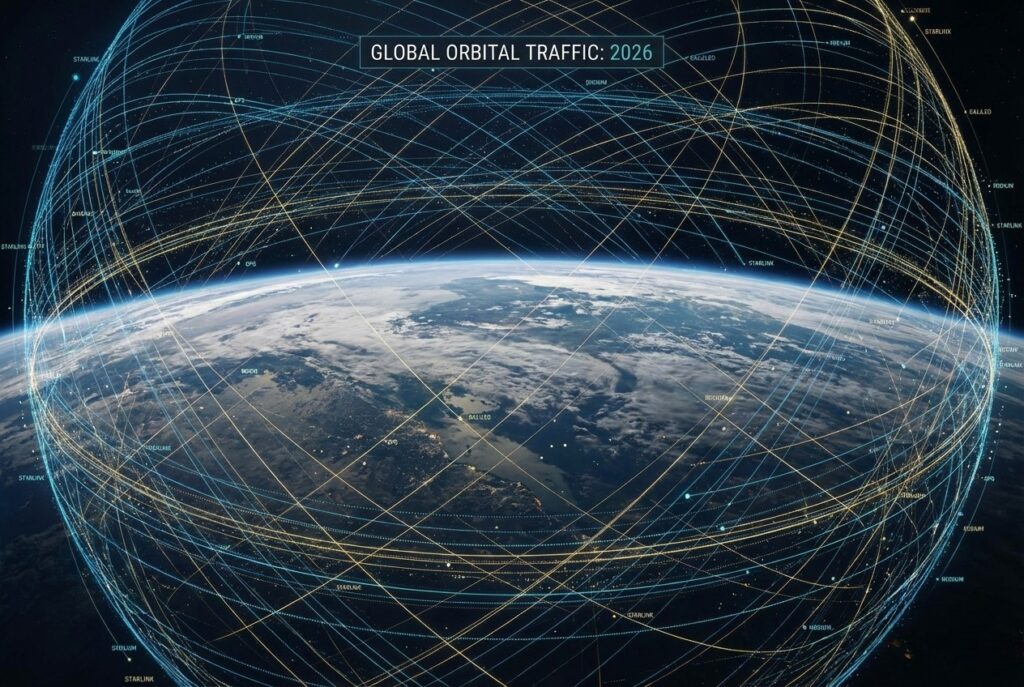
Amazon’s arrival forces the orbital congestion conversation back to the table. Thousands of satellites now occupy these shells. Collision avoidance can’t be manual anymore—it has to be automated. Amazon has pledged to de-orbit its satellites within one year of mission completion, a timeline significantly faster than the FCC’s five-year rule. It’s a necessary promise to keep regulators happy and the orbits usable.
Summary
The monopoly is over. Amazon Leo proves that a second global LEO network is viable, not just vapourware. For the consumer, this means competition is finally coming to satellite broadband. For Amazon, it’s about extending their digital empire to the very edge of the atmosphere.
The hardware works. The lasers are linking. Now, they just have to launch a thousand more of them before July.
