

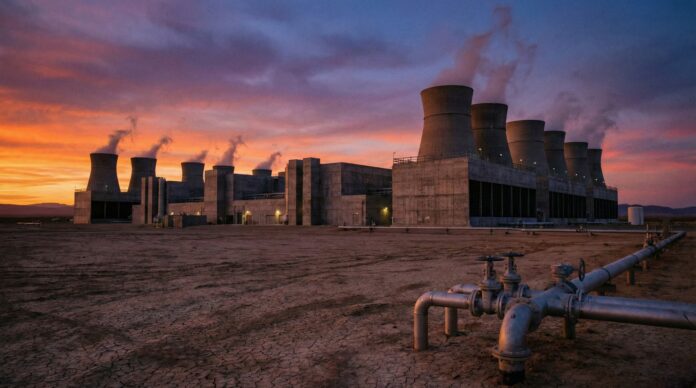
Microsoft handed investors a massive $81.3 billion revenue report this week. But buried in the Fiscal Year 2026 Q2 financials is a bill the planet has to pay: water.
The tech giant confirmed its global water consumption is on track to hit roughly 18 billion liters annually by 2030. That is a 150% jump compared to 2020 levels. The culprit isn’t office plumbing or manufacturing—it’s the liquid cooling systems keeping high-performance AI processors from melting down. Previous internal forecasts underestimated the scale; this new data forces a harsh revision. It puts an uncomfortable spotlight on the physical cost of Large Language Models (LLMs), especially in drought-prone regions like Arizona and India where these data centers live.
The Physics of Intelligence: Why AI Thirsts
It comes down to thermodynamics. Old-school data centers—the ones hosting your email, cloud storage, or basic web traffic—mostly run on air cooling. They function just fine with fans.
The GPUs powering generative AI are different. They run hot. Dangerously hot. To prevent hardware failure, these chips often require liquid cooling. Liquid transfers heat far better than air, but it demands resources. Microsoft’s Q2 update admits that the sheer “compute density” of modern server racks forced this infrastructure shift.
While engineers are moving toward closed-loop systems that recirculate water, the process isn’t perfect. It requires massive initial withdrawals. It needs “makeup water” to replace what evaporates. The 150% increase isn’t a hypothetical model for the distant future; it’s a trend line visible in operations today. As Azure AI expands to handle Copilot and enterprise workloads, the physical footprint expands with it.
Geography of Consumption: Where the Water Goes
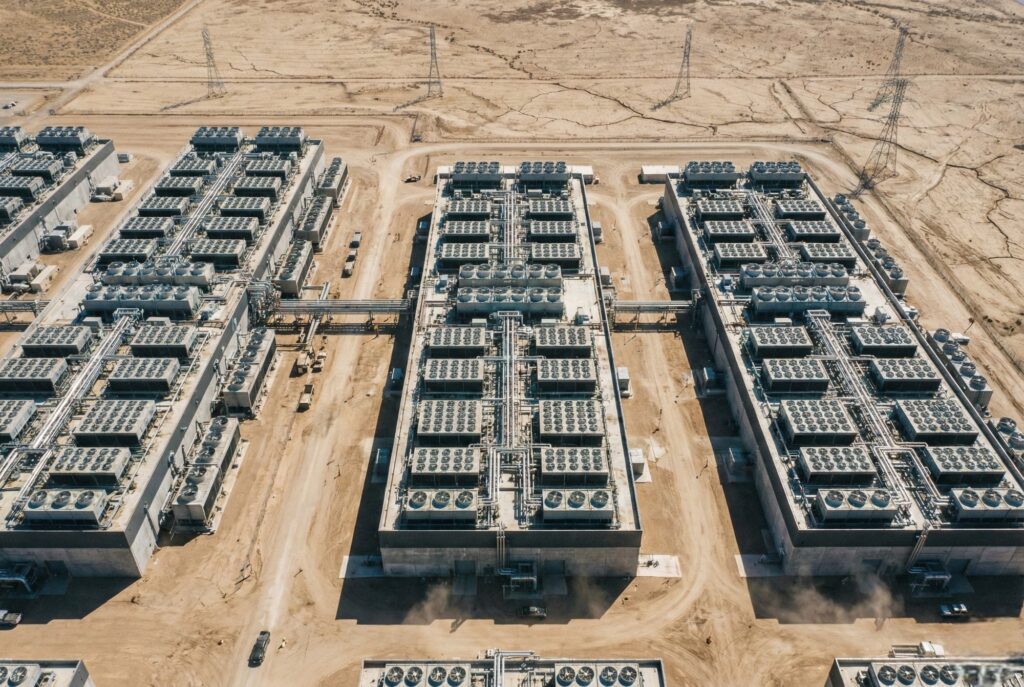
Here is the logistical nightmare: sunlight and water rarely exist in the same place. The best locations for solar-powered data centers are often the regions with the scarcest water supplies.
Microsoft’s latest filings identify “hotspots” where server farms collide with local water crises. The company has to negotiate resource rights in increasingly volatile environments:
- Phoenix, Arizona: A prime hub for US data centers thanks to stable ground and solar potential. It’s also in a multi-decade drought. Microsoft revised local withdrawal estimates down to 2 billion liters (from 3.3 billion) by 2030 by running facilities at higher temperatures. That is an improvement, but 2 billion liters is still a massive draw on a desert ecosystem.
- Pune, India: Water shortages here have sparked civic unrest. In response, Microsoft drastically cut its projected usage from 1.9 billion to 237 million liters using aggressive recycling tech.
- Jakarta, Indonesia: The city is literally sinking due to aquifer depletion. Microsoft lowered its 2030 forecast here from 1.9 billion to 664 million liters.
The trend is clear: efficiency is up, but the margin for error is shrinking.
Data Overview: The Escalation of Resource Use
The table below maps the reality check. It compares the pre-AI baseline against the current trajectory for the decade’s end.
| Metric | 2020 Baseline (Actual) | 2024 Status (Reported) | 2030 Projection (Revised) |
|---|---|---|---|
| Global Water Consumption | 7.9 Billion Liters | ~10.4 Billion Liters | 18 Billion Liters |
| Growth Factor | N/A | +31% vs Baseline | +150% vs Baseline |
| Primary Driver | Standard Cloud Services | Early AI & Cloud Expansion | Generative AI Training/Inference |
| Cooling Method | Predominantly Air | Hybrid Air/Liquid | Liquid/Immersion Dominant |
Engineering a Way Out
Microsoft sees the writing on the wall. They cannot keep draining aquifers at this rate. The “Community-First AI Infrastructure” initiative—highlighted in the Q2 briefing—is the strategy to fix it.
They are betting on three specific shifts:
- Direct-to-Chip Cooling: Instead of freezing the whole room, you pipe coolant directly across the processor. It captures heat faster and cuts evaporation.
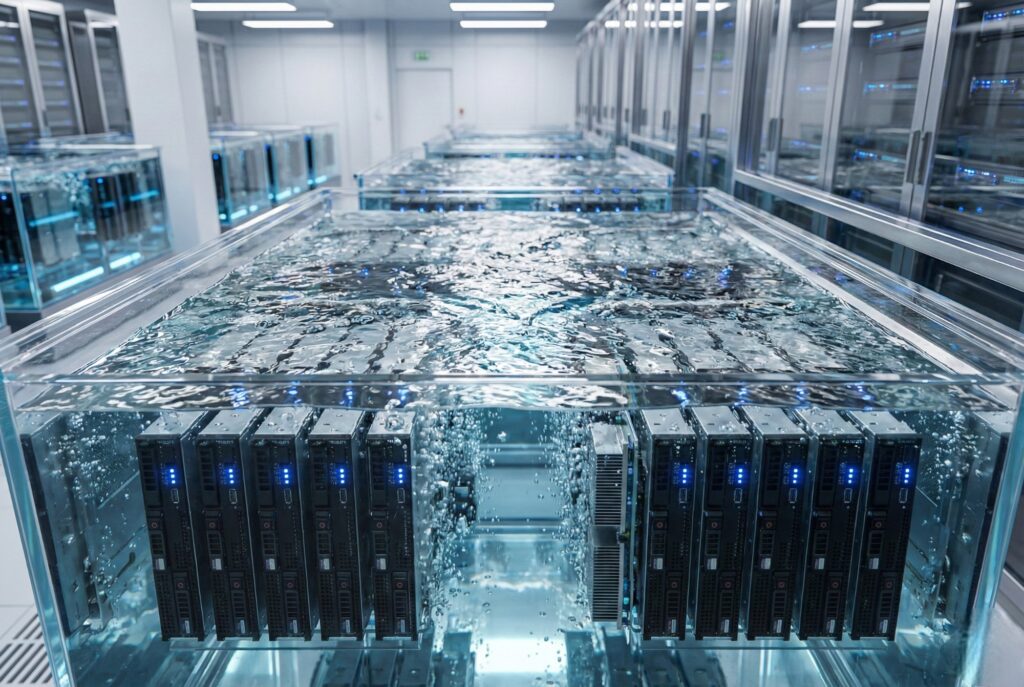
- Immersion Cooling: This is the radical option. You dunk entire server racks into non-conductive fluid. It eliminates water from the cooling loop entirely, but it requires completely redesigning the hardware.
- Water Replenishment: Microsoft claims it will be “Water Positive” by 2030. The plan is to put more water back into stressed basins—via wetland restoration or rainwater harvesting—than they take out. Critics, however, note that replenished water doesn’t always return to the exact source it was taken from.
Analysis: The Efficiency Paradox
This is the Jevons Paradox in action. Make a resource cheaper or more efficient to use, and people just use more of it.
Microsoft has successfully lowered the water needed per unit of compute power. It doesn’t matter. The exponential demand for AI is outpacing the engineering wins. Intelligent Cloud revenue jumped 29% in Q2. That financial success funds more data centers, which cancels out the efficiency gains.
We talk endlessly about the electricity AI burns. We rarely talk about the plumbing. But electricity can be transmitted across a continent; water has to be sourced locally. That makes the “Water Bill” a localized, political ticking clock.
Summary and Outlook
This Q2 disclosure is a warning shot for the industry. A 150% spike in water usage proves the digital economy is still tethered to physical limits. Microsoft is throwing everything at the problem—advanced cooling, replenishment projects, efficiency tweaks—but the demand curve is steep.
Investors and policymakers need to look past the revenue growth. As models get larger, the ability to innovate out of water dependency will define how fast, and where, this technology can actually scale.
