

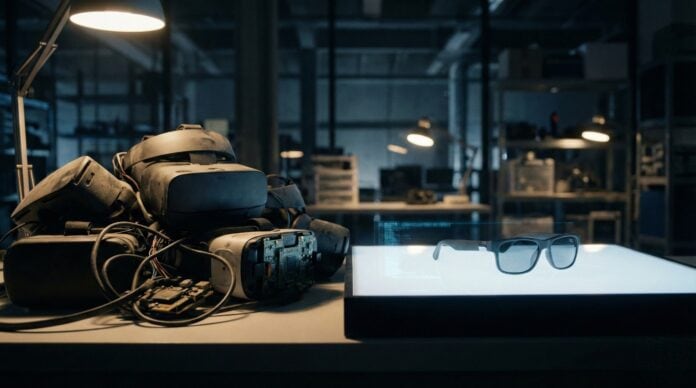
Meta is done burning cash on a virtual dream that isn’t sticking. The company initiated a massive restructuring of its Reality Labs division this week, slashing roughly 1,500 jobs and cutting the unit’s budget by nearly 20 percent. This marks a hard pivot—and a definitive retreat—from CEO Mark Zuckerberg’s “Metaverse-first” strategy.
The target has moved. Instead of pouring billions into virtual reality, Meta is realigning its war chest toward a more immediate, profitable obsession: artificial intelligence and consumer-grade smart glasses. The shift comes after years of unchecked spending failed to produce a mainstream hardware hit, forcing the company to halt development on premium prototypes and double down on what’s actually working.
The $70 Billion Reality Check
For four years, Reality Labs was the money pit. It drove Meta’s capital expenditure, burning cash in pursuit of the Horizon Worlds platform and the Quest headset line. But the receipt is in, and it is ugly.
Financial disclosures show cumulative operating losses topping $70 billion since 2020. In Q4 2025 alone, Reality Labs posted a nearly $5 billion operating loss. Investors are anxious. They want capital efficiency, not science fiction.
Andrew Bosworth, Meta’s Chief Technology Officer, didn’t mince words in the internal memo announcing the changes. The focus is now “operational discipline.” The layoffs—hitting about 10 percent of the division—specifically target the teams building experimental VR hardware and the struggling Horizon Worlds.
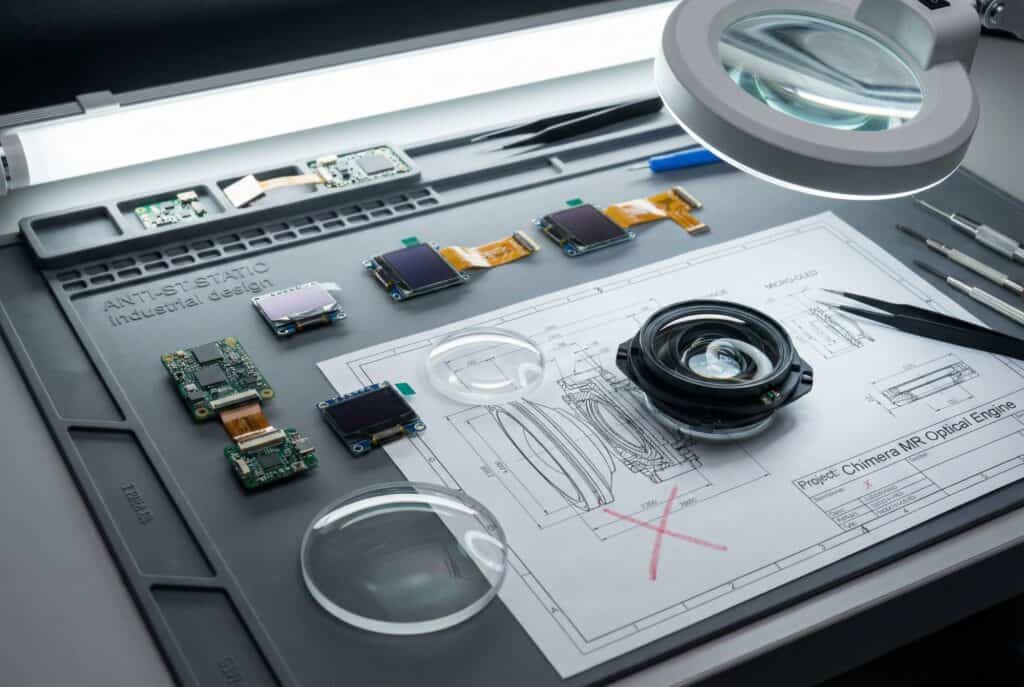
Zuckerberg once bet the house on the Metaverse replacing the mobile internet. Market realities disagreed. Components like micro-OLED displays are too expensive, and VR retention rates remain stubbornly low. The roadmap had to break.
Strategic Shift: From VR Immersion to AI Assistants

This isn’t a total exit from hardware. It’s a correction. Meta is shifting toward devices that actually fit into a user’s day, rather than demanding they strap a computer to their face. The Ray-Ban Meta smart glasses proved that people want lightweight, practical tech—cameras and audio without the bulk.
That success is the new directive.
Money saved from the Reality Labs gutting will flow directly into AI infrastructure. We are talking expanded Large Language Models (LLMs) and the custom silicon required to power them. The goal is an always-on AI assistant in a pair of glasses, moving away from the isolating “immersive” experience of traditional VR.
Comparison: The Strategic Realignment
| Feature | Metaverse Era (2021–2024) | AI & Wearables Era (2025–Present) |
|---|---|---|
| Primary Focus | (VR) | Augmented Reality (AR) & AI Assistants |
| Flagship Hardware | Meta Quest Pro ($999+) | Ray-Ban Meta Smart Glasses ($299) |
| Key Metric | Time spent in | Daily active AI interactions |
| Capital Allocation | Custom VR displays & optics | GPU clusters & Model training |
| Target Audience | Gamers & Enterprise users | General consumer mass market |
Hardware Casualties and “La Jolla” Cancellation
The roadmap is already shrinking. The most notable casualty is “La Jolla,” a high-end mixed-reality headset meant to rival Apple’s Vision Pro in 2027. It’s dead.
Projected costs pushed the unit price over $1,000—a non-starter for mass adoption. Meta is unwilling to subsidize hardware that few will buy.
The bleeding stops elsewhere, too. Meta has “paused” partnerships with manufacturers like Asus and Lenovo. The plan to expand the Horizon OS ecosystem is effectively on ice. Instead of diluting efforts across third parties, Meta will circle the wagons around its core Quest line—likely the budget-friendly Quest 3S and the upcoming Quest 4.
Impact and Outlook
This is Meta growing up. The company is cutting losses on high-end research that yielded limited commercial returns to stabilize operating margins.
Wall Street likes the discipline. Investors see a company correcting an over-investment in a distant future. For the consumer, expect fewer experimental prototypes and a faster rollout of AI eyewear. The Metaverse isn’t here yet, but the AI assistant is ready for deployment.
