

Wall Street was wrong. Not just slightly off—completely wrong.
After months of bearish reports predicting that Huawei would eat Apple’s lunch in Asia, the Cupertino giant dropped a bomb on Thursday: revenue in Greater China didn’t shrink. It exploded. Apple posted a staggering 38% year-over-year increase in the region, driving total quarterly revenue to $143.8 billion. That is a 16% jump from last year.
The company reported earnings per share (EPS) of $2.84. This figure doesn’t just beat the consensus; it dismantles the persistent narrative that Apple is losing its grip on the premium market. While analysts spent Q4 warning of a localized economic slowdown and “patriotic pivots” to domestic Chinese brands, Apple quietly delivered $25.5 billion in regional sales—obliterating the $21 billion estimate.
The “China Collapse” Narrative Crumbles
For the last two quarters, the financial press has been flooded with downgrades. The theory was simple: the iPhone 17 lacked flash, and Chinese consumers were leaving for Huawei.
Thursday’s data killed that theory.
CEO Tim Cook pointed to “staggering” demand, noting that the active install base in mainland China has hit an all-time high. But the most telling metric isn’t upgrades from loyalists—it’s the defectors. Cook highlighted that the “switcher” rate (users moving from Android to iOS) accelerated significantly compared to Q1 2025. Apple isn’t just defending its turf; it is actively raiding the competition’s user base in urban centers.
Q1 2026 By The Numbers
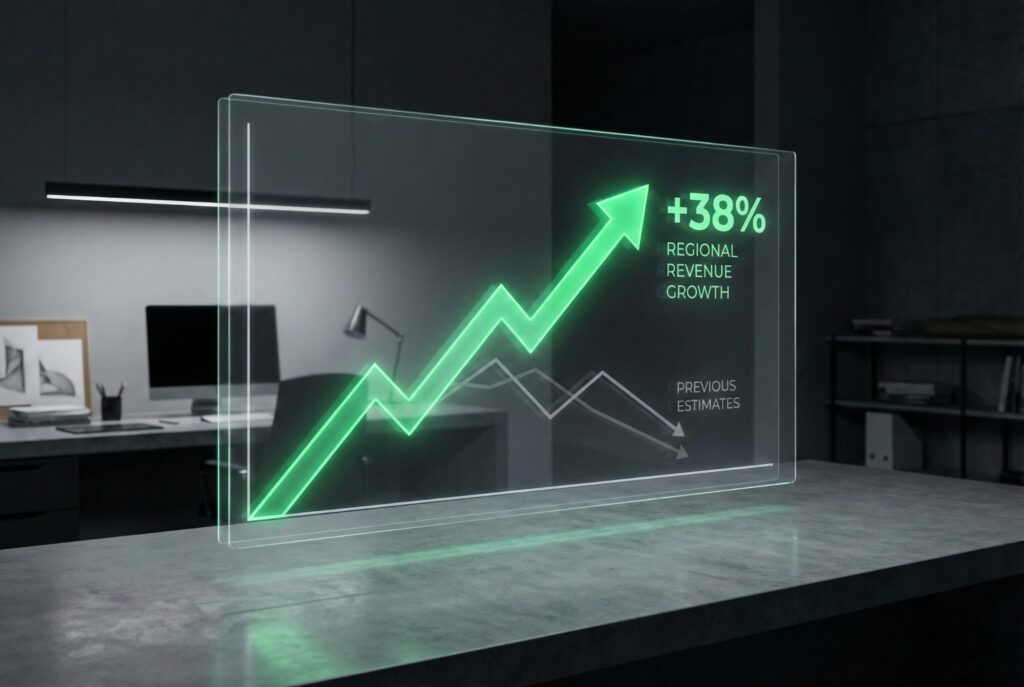
The holiday quarter is always big for Apple, but Q1 2026 eclipsed the “supercycle” peaks of 2021. The gap between analyst expectations and reality is stark.
| Metric | Q1 2026 (Actual) | Q1 2025 (Prior Year) | YoY Change | Analyst Est. (Consensus) |
|---|---|---|---|---|
| Total Revenue | $143.8 Billion | $124.3 Billion | +16% | ~$138.5 Billion BEAT |
| Greater China Rev | $25.5 Billion | $18.5 Billion | +38% | ~$21.3 Billion BEAT |
| iPhone Revenue | $85.3 Billion | $69.7 Billion | +23% | ~$78.7 Billion BEAT |
| Services Revenue | $30.0 Billion | $26.3 Billion (approx) | +14% | ~$29.5 Billion BEAT |
| EPS | $2.84 | $2.39 (approx) | +19% | $2.67 BEAT |
Note: Data sourced from Apple Investor Relations, Jan 29, 2026 release.
Hardware Over AI?
Much of the 2025 tech narrative obsessed over Generative AI. Apple’s results, however, suggest that fundamentals still move markets.
The iPhone 17 faced criticism at launch for being an iterative update. Critics called it safe. Consumers called it reliable. The device’s performance in China indicates that build quality and ecosystem integration still matter more to the average buyer than experimental AI features.
Simultaneously, Services revenue broke the $30 billion ceiling. This segment—iCloud, Apple Music, the App Store—is the company’s high-margin safety net. The correlation is clear: when device sales spike, subscription revenue follows immediately. The ecosystem trap remains as effective as ever.
Analyst “Mea Culpa”
The disparity between market sentiment and reported reality forced a scramble on Friday morning. Several major firms holding “Hold” or “Sell” ratings—predicated on a 5-10% China contraction—were caught flat-footed.
Analysts at Wedbush and Morgan Stanley have already walked back their skepticism. The consensus is shifting. The question is no longer about Apple’s survival in Asia. Now, investors are asking if this is a one-time “catch-up” from delayed upgrades, or if the Android premium market is far weaker than the data suggested.
Looking Ahead
Apple’s outlook for the March quarter (Q2 2026) is aggressive: revenue growth forecasted between 13% and 16%.
CFO Kevan Parekh noted that the supply chain bottlenecks that plagued the iPhone 15 and 16 lifecycles are gone. Inventory is flowing freely to meet the demand in Asia. The Q1 report serves as a sharp reminder that macroeconomic headlines often fail to track ground-level consumer behavior. Apple has stabilized its position in China, and the ball is now back in Huawei’s court.
