
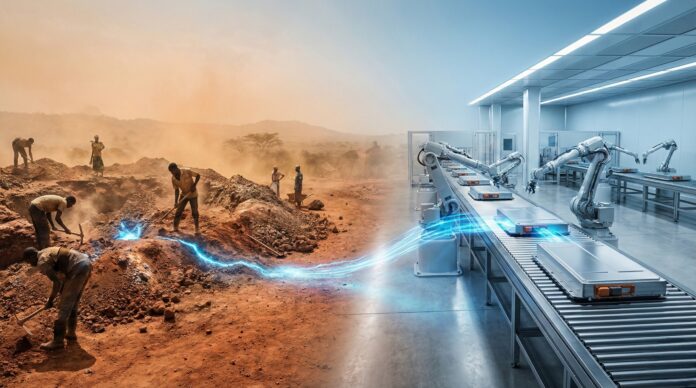
Apple’s battery supply chain just hit a hard pivot. As of today, 50 percent of the cobalt powering its devices comes from recycled sources, not mines. This isn’t a vague 2030 promise; it’s a verified figure from the latest Environmental Progress Report, marking a halfway point in the company’s race to sever ties with virgin extraction by 2025.
Why does this matter? Because digging for cobalt—mostly in the Democratic Republic of the Congo (DRC)—is messy. Ethically, environmentally, politically. By shifting to recycled feedstock, Apple is attempting to prove that a circular economy can actually scale for the world’s largest tech giant.
The “Virgin Cobalt-Free” Mandate
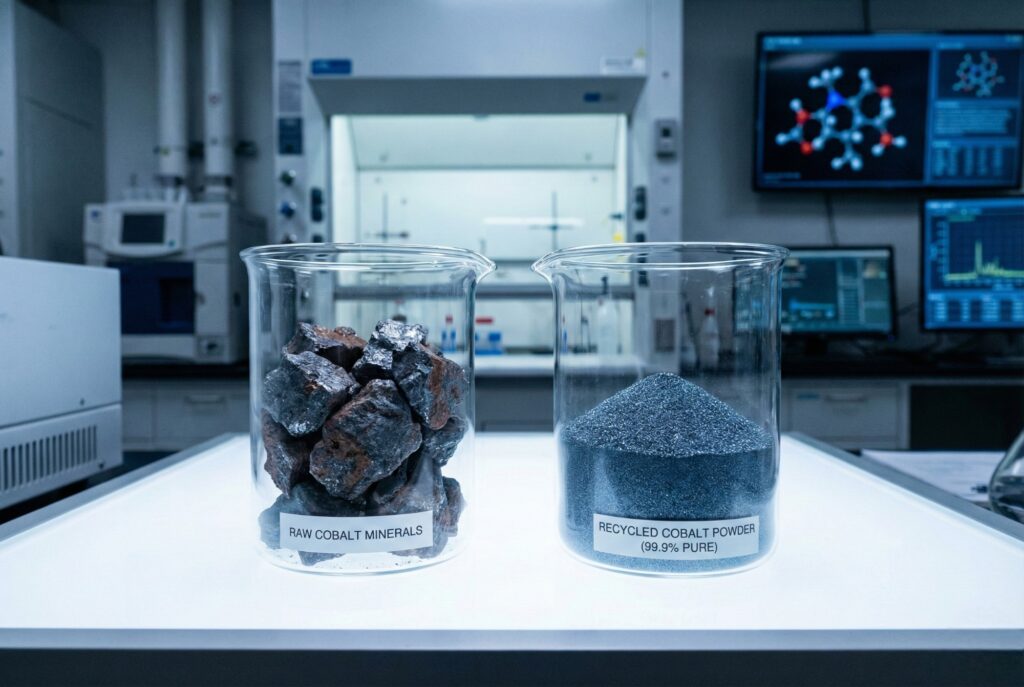
Usually, “cobalt-free” describes a change in battery chemistry, like switching to Lithium Iron Phosphate (LFP). Apple isn’t doing that. They still need cobalt for the energy density required by iPhones and MacBooks. Instead of ditching the mineral, they are ditching the miners.
“We are effectively decoupling our growth from the mining of virgin material,” said a spokesperson from Apple’s Environment team. It’s a nice sentiment, but the mechanics are brutal. The heavy lifting is done by “Daisy”—Apple’s disassembly robot—which extracts cobalt pure enough to go right back into the manufacturing line. That closed loop is the engine behind this sudden metric jump.
Accelerating the Timeline
Analysts didn’t see this coming. Just two years ago, recycled cobalt made up less than a quarter of Apple’s battery usage. The leap to 50 percent suggests that “urban mining”—harvesting materials from dead devices—is finally moving the needle.
The data shows a trajectory that is anything but linear:
| Metric | 2021 | 2022 | Current Milestone | 2025 Goal |
|---|---|---|---|---|
| Recycled Cobalt (Batteries) | 13% | 25% | 50% | 100% |
| Recycled Rare Earths | 45% | 73% | >80% | 100% (Magnets) |
| Recycled Tin (Soldering) | 30% | 38% | ~50% | 100% |
| Daisy Disassembly Rate | 200/hr | 200/hr | Optimization Focus | Expanded Fleet |
Source: Apple Environmental Progress Reports
The Supply Chain Ripple Effect

Robots are the easy part. The hard part is strong-arming the supply chain. Apple has effectively mandated that its battery manufacturers—including massive partners in China—prioritize certified recycled feedstock.
This creates an immediate market for “ethical cobalt.” Recyclers now have a guaranteed whale of a buyer in Cupertino. It also acts as a financial hedge. Cobalt prices are volatile; a steady stream of recovered material offers protection against market spikes.
The risk? Purity. Battery chemistry is temperamental. Even microscopic impurities can lead to thermal runaway or dead batteries. Apple’s engineers have to ensure this “second-life” material behaves exactly like the fresh stuff. There is no room for error here.
Beyond the Battery
Mined cobalt is dirty. It takes massive energy to extract and refine. Recycled cobalt skips the most carbon-heavy phases of production.
This shift puts Android competitors in a bind. If the iPhone 16 Pro runs on 50 percent trash-harvested cobalt and still hits performance benchmarks, the “sustainability hurts quality” argument dies. Rivals will have to scramble to match these circular supply chain efforts or risk looking like dinosaurs.
Looking Ahead
Fifty percent is a win. The remaining fifty percent is the headache. To hit the 100 percent target by 2025, Apple needs a massive influx of trade-ins. They can’t recycle batteries that are sitting in your desk drawer.
The technology is ready. The robots work. But the success of this “Virgin Cobalt-Free” mission now depends entirely on user behavior—getting the device back is the only way to feed the machine.
