

SpaceX has the high ground. As of early 2026, Starlink isn’t just a leader; it’s the standard, commanding a fleet of over 9,000 active satellites and connecting nearly 9 million subscribers. Amazon’s Project Kuiper is chasing hard, but it’s running behind. Despite AWS backing and massive funding, Amazon has deployed only a fraction of its constellation.
The reality for consumers this year is simple. Starlink is a global utility you can buy today. Kuiper is a regional beta test. While Amazon fights to meet an FCC deadline—launching 50% of its birds by July 2026—Starlink has moved on to dominating polar routes and ocean shipping lanes. The gap is widening. Unless you live in one of Kuiper’s five test markets (US, UK, Canada, France, Germany), there is no choice to make.
The Coverage Gap: Global vs. Regional

The maps tell two different stories. Starlink has graduated from “emerging tech” to infrastructure. It works. Everywhere. Thanks to fully operational optical laser links, data hops between satellites in space, bypassing ground stations entirely. A researcher in Antarctica and a cargo ship captain in the Pacific get the same signal.
Kuiper is still working through its awkward teenage phase. Coverage is strictly limited to specific latitudes servicing its launch markets. Amazon flies its satellites higher—roughly 590–630 km compared to Starlink’s 550 km—to see more ground per satellite. But altitude can’t fix a lack of density. Without a thick mesh of orbiters, continuous service is mathematically impossible outside the test zones.
Note: If you are a maritime user or live in the Southern Hemisphere outside a test city, stop reading. Starlink is your only Low Earth Orbit (LEO) option for 2026.
Speed and Latency: Real-World Data
We have years of data on Starlink. It’s messy, real, and stabilized. In 2026, residential users generally pull 100 to 250 Mbps, with latency sitting tight between 20–40 ms. The “Direct to Cell” feature is live, too. Unmodified LTE phones can text and call via satellite right now. Kuiper hasn’t deployed a commercial equivalent yet.
Kuiper runs on promises. They are good promises—Amazon claims 400 Mbps for standard terminals and 1 Gbps for enterprise—but they are untested at scale. A managed test with empty satellites is vastly different from a loaded network. Early adopters in 2026 should expect the jitters. Handoffs between satellites might drop. Speeds will fluctuate. Starlink solved these growing pains years ago; Kuiper is just meeting them now.
Hardware and Ecosystems
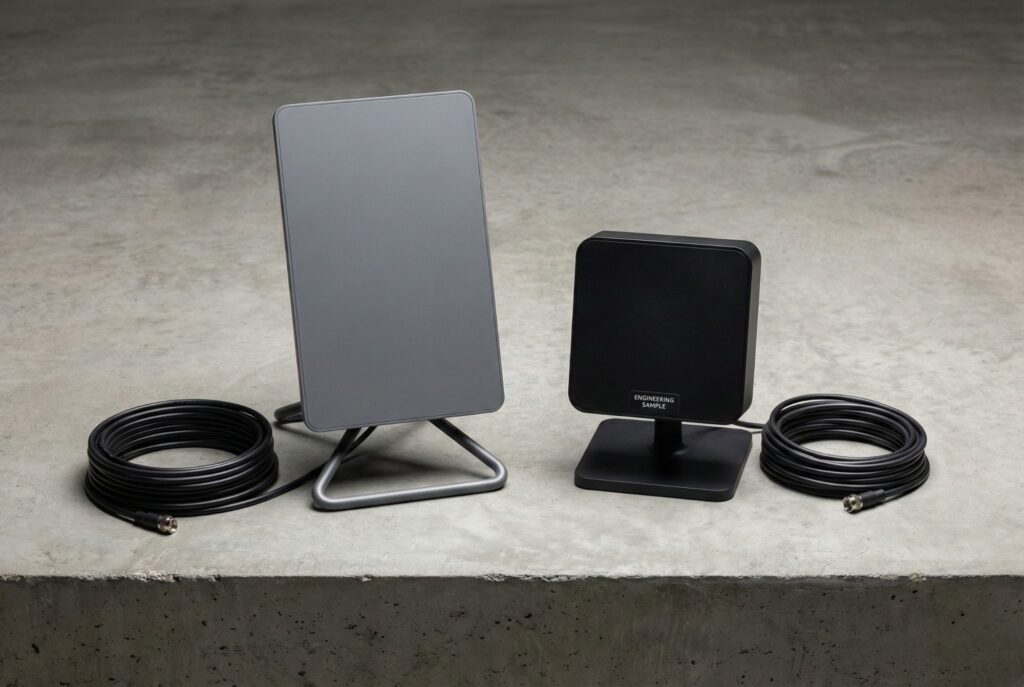
The fight isn’t just in the vacuum of space. It’s on your roof. Starlink’s “Dishy” costs $599. It works. You plug it in, it points itself at the sky, and you have internet. It’s tough enough to survive a blizzard.
Amazon plans to win on price. Using its massive manufacturing engine, Amazon targets a terminal cost under $400. But their real play is the backend. Kuiper integrates directly with Amazon Web Services (AWS). This is the “secret sauce” for businesses. Enterprise traffic can bypass the public internet entirely, hopping from the dish straight into the AWS cloud. It’s a smart angle for corporate security, even if it doesn’t mean much for a family streaming Netflix.
2026 Comparison: The Specs at a Glance
| Feature | SpaceX Starlink | Amazon Project Kuiper |
|---|---|---|
| Status (Early 2026) | Fully Operational (Global) | Limited Commercial Rollout |
| Satellites in Orbit | 9,000+ | ~200+ (Ramping up) |
| Download Speed | 100–250 Mbps (Residential) | Up to 400 Mbps (Projected) |
| Latency | 20–40 ms | Projected 30–50 ms |
| Hardware Cost | ~$599 | Target <$400 |
| Monthly Cost | ~$120 (Standard) | Est. $80–$120 |
| Key Advantage | Proven global coverage, mobility | AWS Integration, lower hardware cost |
The Regulatory Hurdle
Amazon is fighting the clock. The FCC mandated that Amazon deploy half its 3,236 satellites by July 2026. They are behind. Rocket delays—stumbles with Vulcan Centaur and New Glenn—forced Amazon to ask for an extension.
This matters. Every month Amazon waits on a launchpad is a month Starlink spends digging moats around the enterprise and military sectors. Starlink is already iterating on its second-generation “V2” satellites. Amazon is still trying to fill its first orbital shell.
Impact Summary
For a user in 2026, the “war” is mostly noise. Starlink won the race for general coverage. It is the default utility for rural homes and disaster zones.
But don’t write Kuiper off. Amazon has the capital to survive a slow start. Their entry is already forcing hardware prices down, and that $400 terminal is attractive. As launches pick up speed later this year, Kuiper will evolve from a regional experiment into a genuine alternative. Just not yet.
