
The “console-quality” dream died quietly.
When Apple Arcade launched in 2019, the pitch was bold: a sanctuary for prestige originals that would rival Nintendo’s Switch. By early 2026, that ambition has evaporated. In its place sits a calculated, predictable catalog dominated by ad-free mobile classics and licensed family fodder.
Apple didn’t just pivot; they inverted the entire business model. The tech giant has largely stopped funding high-risk, exclusive creative work. Instead, the focus has shifted entirely to “App Store Greats”—zombie versions of old free-to-play hits with the monetization ripped out. This strategy prioritizes consistent engagement over artistic prestige. It has alienated the developer community, certainly. But it has also solidified the service’s role: Arcade is no longer a standalone competitor to Game Pass. It is simply a sticky value-add for the Apple One bundle.
While the service remains profitable within Apple’s services ecosystem, the mood behind the curtain is grim. Reports from early 2025 through today indicate that upfront payments to developers have plummeted. The “bonus pool” payouts—once a lucrative incentive—have shrunk. For subscribers, the result is a reliable library of casual distractions like Fruit Ninja Classic+, but a stark absence of the narrative-driven epics that were promised.
The Great “Plus” Migration
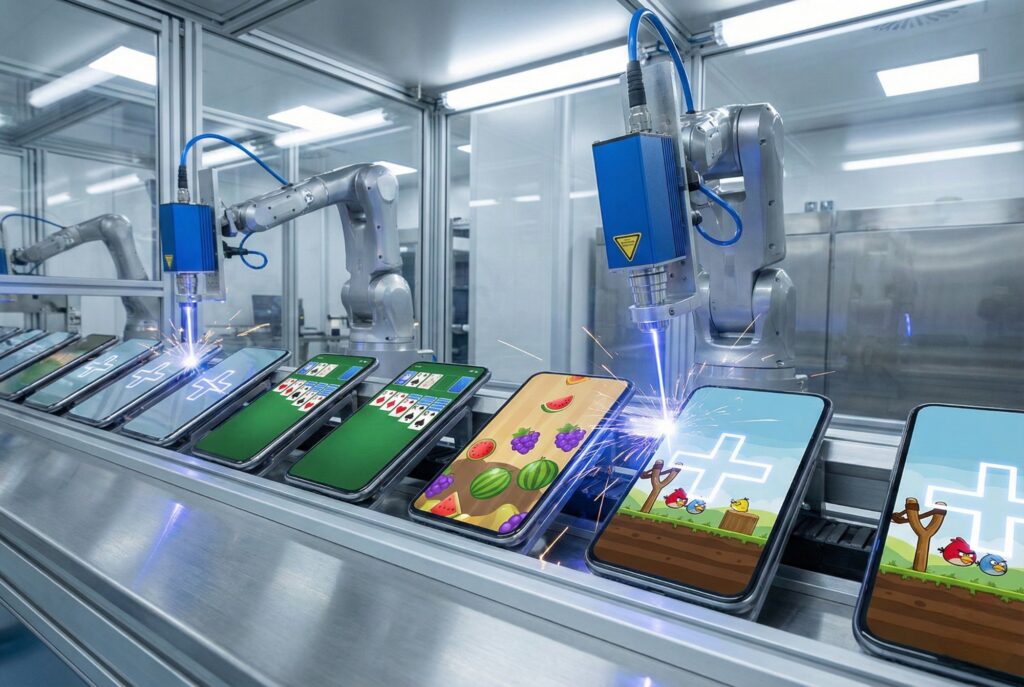
At launch, Apple cut checks for industry legends like Final Fantasy creator Hironobu Sakaguchi to build exclusive worlds. Today, that strategy is dead. The service is aggressively populating its library with “Plus” titles—legacy App Store hits re-released without ads or microtransactions.
This is not accidental. “Plus” titles come with built-in fanbases. More importantly, they possess established gameplay loops designed for retention. Compare a narrative indie game to a grinder like Kingdom Rush 5: Alliance TD+ or Solitaire by MobilityWare+. You finish the indie game in six hours and delete it. You play Solitaire forever.
Apple loves “forever.” It maximizes the “time spent” metric—the primary KPI for their internal retention goals. For players, it offers a safe haven from the predatory monetization that plagues the free App Store. But for the industry, the signal is clear: Apple is no longer interested in competing for core gaming experiences.
Comparing the Strategy: 2019 vs. 2026
| Feature | Launch Strategy 2019 | Current Strategy 2025-2026 |
|---|---|---|
| Primary Content | High-budget Originals (Fantasian, Sayonara Wild Hearts) | “App Store Greats” & “Plus” Titles (Angry Birds, Fruit Ninja) |
| Developer Incentives | High upfront funding + generous royalties | Lower upfront fees + performance-based retention bonuses |
| Target Audience | Core gamers & Indie enthusiasts | Families & Casual mobile players |
| Monetization Model | Pure Subscription Driver | Retention Anchor for “Apple One” Bundle |
| Game Lifespan | Finite narrative experiences | Infinite replayability loops |
Developer Discontent and “Opaque” Metrics
Behind the scenes, the partnership between Apple and its creative talent has frayed. Reports from mobilegamer.biz and VGC paint a picture of frustration.
The core issue is cash. In the early days, Apple paid significant upfront sums. These payments often covered a game’s entire production budget, effectively acting as a safety net for risky artistic endeavors. Those upfronts have reportedly been slashed.
Then there is the “bonus pool.” This royalty fund is paid out based on user engagement. Developers have criticized the metrics used to calculate these payouts as a “black box.” Apple uses a proprietary calculation involving a “qualifying session” but refuses to fully define what that entails. Without transparency, studios cannot forecast revenue. Arcade has become a financial gamble. Some developers have gone as far as to say the service has the “smell of death” regarding new, original IP. If the project doesn’t fit the new “family-friendly retention” mandate, Apple kills it.
The Vision Pro Problem
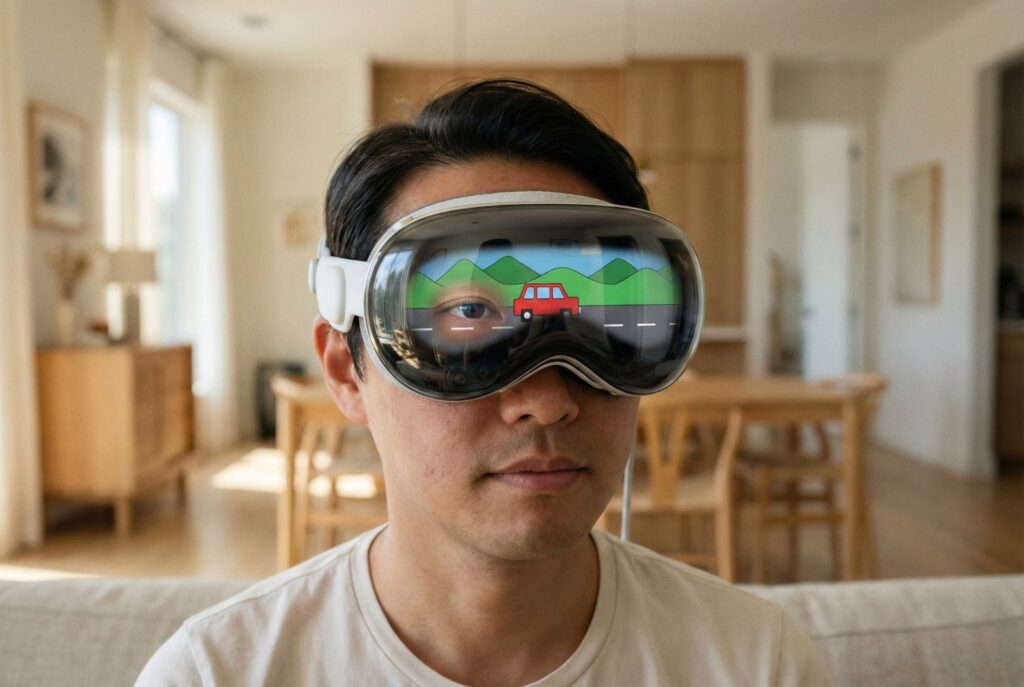
You can see the apathy most clearly in the hardware strategy. Specifically, the Vision Pro.
The headset is capable of running high-fidelity software. Yet, Arcade has not become the killer app repository for spatial computing. Instead of funding triple-A VR experiences to sell the hardware, Apple has largely relied on porting existing iPad games. The “spatial” offerings are often light, casual titles like What the Car? or Gears & Goo.
Developers have noted that Apple offers little to no extra financial incentive to build dedicated Vision Pro titles. It is a circular firing squad: studios won’t build expensive games for a niche install base without Apple fronting the bill, and Apple won’t front the bill because their strategy is now low-cost retention.
The Utility of “Good Enough”
Despite the gloom from the creative side, the consumer reality is nuanced. For a family sharing an Apple One subscription, Arcade is arguably better now than it was at launch.
Parents can download Crayola Scribble Scrubbie Pets+ or LEGO Hill Climb Adventures+ for their children without fear. There is no risk of a $100 credit card bill from accidental gem purchases. The service has morphed from a discovery engine into a utility. It is a “Safe Space.” It is no longer trying to change the medium of gaming; it is simply trying to make the iPhone a cleaner place to play.
This utility prevents churn. A user might cancel a standalone $6.99 Arcade subscription if they haven’t played a new game in a month. But they are far less likely to cancel an Apple One bundle that holds their iCloud photos, Apple Music, and “safe” games for the kids.
What This Means for the Future
Apple Arcade has successfully transitioned from a platform for artistic discovery to a service of convenience. The “console-class” dream didn’t fail because the hardware couldn’t handle it. It failed because the business model of mobile subscriptions favors infinite retention over finite quality.
As we move deeper into 2026, do not expect announcements of groundbreaking originals from legendary directors. Expect “Plus” versions of the games you played on your iPhone 8. Apple has stopped trying to beat Nintendo at its own game. They have decided to simply be the best version of the App Store they can be.
